Biggest Brands on Shopify
Some of the world’s biggest brands run on Shopify Plus. Learn why enterprise businesses choose Shopify, how they scale reliably, and what growing brands can apply.

What Enterprise-Scale Businesses Teach Us About Building for Growth
For years, Shopify has carried an unfair reputation: a platform best suited for small businesses and early-stage ecommerce brands. That perception has changed decisively.
Today, some of the world’s most recognizable consumer brands handling millions of users, global traffic spikes, complex operations, and high-stakes product launches run their digital commerce on Shopify and Shopify Plus. These are not accidental choices. They are strategic platform decisions made after performance failures, scaling limitations, or operational complexity exposed the cracks in legacy systems.
This article is not about celebrating brand names. It is about understanding why enterprise-scale businesses choose Shopify, how they architect it differently from smaller brands, and what growing businesses can learn before scale forces painful migrations or expensive rebuilds.
At Web Pundit, we regularly work with brands facing similar inflection points just earlier in the journey. The lessons are remarkably consistent.
Why Large Brands Choose Shopify (and Why “Ease of Use” Is Not the Real Reason)
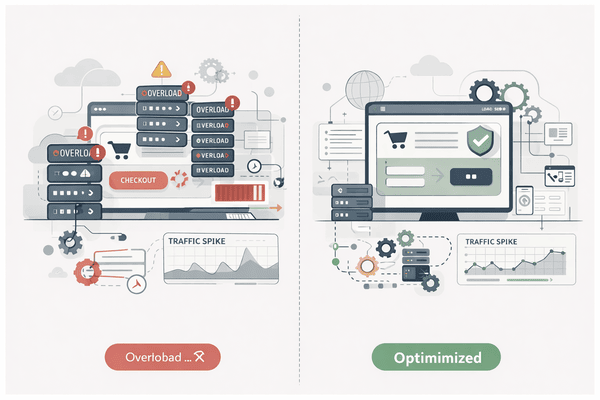
Enterprise brands do not select platforms based on simplicity alone. They prioritise reliability, scalability, architectural flexibility, and operational control. Shopify’s evolution into a serious enterprise commerce platform is driven by four core capabilities.
1. Infrastructure That Absorbs Demand Spikes
Product launches, flash sales, limited-edition drops, and cultural moments generate traffic patterns that are neither predictable nor gradual. Shopify’s cloud-native infrastructure is built to absorb sudden surges without merchants needing to manage servers, load balancers, or failover systems.
For brands operating at scale, this is not convenience it is revenue protection.
2. Shopify Plus and Checkout Stability
Checkout is where legacy platforms often fail under pressure. Shopify Plus provides:
- Dedicated infrastructure resources
- Highly optimised checkout flows
- Advanced APIs and automation
- Support for high-volume transactions
Large brands value Shopify not for storefronts alone, but for checkout reliability under extreme concurrency.
3. Headless and Composable Commerce Readiness
Modern brands rarely operate a single-channel storefront. They sell through:
- Websites
- Mobile apps
- Marketplaces
- POS systems
- Social commerce
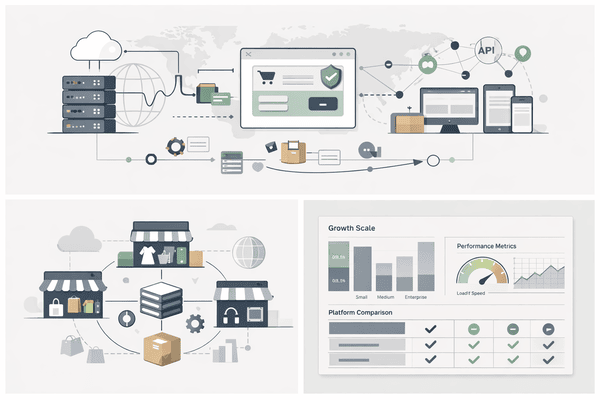
Shopify’s APIs, Hydrogen framework, and headless capabilities allow brands to decouple frontend experiences from backend commerce logic without abandoning operational stability.
4. Reduced Operational Overhead
Enterprise teams increasingly want engineers focused on differentiation, not infrastructure maintenance. Shopify removes the need to manage hosting, upgrades, security patches, and compliance baselines freeing teams to build experiences instead of babysitting systems.
Enterprise Brands on Shopify: Strategic Use Cases and Lessons
Gymshark: Scaling After Platform Failure
Gymshark’s early growth exposed the limitations of their previous ecommerce infrastructure. High-profile site crashes during major launches became both a reputational and financial risk.
The move to Shopify Plus was driven by:
- Traffic resilience during drops
- Faster iteration cycles
- Reduced infrastructure complexity
Key lesson:
Brands rarely migrate platforms during growth phases. They migrate after something breaks. Shopify is often chosen when performance reliability becomes non-negotiable.
Kylie Cosmetics: Flash-Sale Readiness at Internet Scale
Kylie Cosmetics built its business on scarcity-driven launches that attract millions of users within minutes. Very few platforms can withstand that load consistently.
Shopify Plus enabled:
- Stable checkout during massive concurrent sessions
- Rapid storefront changes without deployment risk
- Integration with omnichannel retail operations
Key lesson:
If your revenue depends on moments not steady traffic your platform must prioritise burst handling over theoretical scalability.
Taylor Swift Merchandise: Global Fan Demand Without Downtime
Merchandise sales tied to global tours generate unpredictable, worldwide traffic spikes. Shopify’s infrastructure allows global fans to purchase simultaneously without regional performance degradation.
Key lesson:
Global brands need platforms that scale geographically, not just vertically. Latency, localisation, and payment flexibility matter as much as design.
Decathlon: Enterprise Retail Meets Digital Agility
As one of the world’s largest sporting goods retailers, Decathlon uses Shopify Plus to modernise and streamline parts of its digital commerce operations—particularly in markets requiring faster iteration and experimentation.
Key lesson:
Even enterprise retailers with deep internal systems adopt Shopify when speed and agility become strategic advantages.
Fashion Nova: High SKU Velocity and Traffic Intensity
Fast-fashion brands operate under constant pressure: rapid catalog updates, influencer-driven spikes, and relentless performance expectations.
Fashion Nova’s use of Shopify Plus and headless implementations supports:
- High SKU churn
- Continuous merchandising changes
- Traffic volatility driven by social media
Key lesson:
High-growth ecommerce demands architectural flexibility. Shopify succeeds when paired with thoughtful frontend and performance planning.
Glossier: Reclaiming Control Over Customer Experience
Glossier’s migration to Shopify Plus was driven by the need to simplify operations while maintaining a strong brand-driven experience.
Key lesson:
Complexity does not equal sophistication. Many enterprise brands move to Shopify to reduce technical debt, not increase it
Daniel Wellington: Simplifying Global Commerce
Managing international storefronts across regions creates operational drag. Shopify enables centralised management of multiple markets while maintaining localisation.
Key lesson:
Scaling globally requires governance, not fragmentation. Shopify provides structure without sacrificing flexibility.
How Enterprise Brands Use Shopify Differently
The success of large brands on Shopify is not accidental. They approach the platform with discipline.
What Growing Brands Get Wrong When Copying Enterprise Playbooks
Many mid-sized businesses attempt to replicate enterprise Shopify setups without understanding the underlying principles. Common mistakes include:
Overloading Apps Without Architectural Planning
Excessive app usage introduces performance bottlenecks and security risks. Large brands use fewer, more deliberate integrations.
Redesigning Without Performance Budgets
Enterprise storefronts are designed with strict performance constraints. Visual ambition never overrides load time discipline.
Ignoring Checkout Optimization
Most revenue losses occur at checkout. Enterprise brands treat checkout infrastructure, not UI.
Scaling Traffic Without Scaling Architecture
Marketing success often exposes technical fragility. Scaling campaigns without backend readiness creates conversion loss.
Where Web Pundit Fits Into This Picture
At Web Pundit, we work with brands before failure forces change.
Our Shopify services focus on:
- Performance-first Shopify redesigns
- Shopify Plus readiness audits
- CRO-driven UX improvements
- Headless commerce strategy and execution
- Long-term scalability planning
We do not optimise for aesthetics alone. We optimise for reliability, conversion, and growth under pressure, the same principles that enterprise brands apply.
The question is no longer whether Shopify can support large businesses. The evidence is clear, it already does.
The real question is whether your Shopify implementation is built with the same discipline, foresight, and architectural clarity that enterprise brands apply.
Because growth does not fail gracefully. Platforms either absorb it or expose every weakness.
If brands operating at global scale invest deeply in Shopify architecture and performance, the opportunity for growing businesses is even greater when done right.
Talk to Web Pundit’s Shopify experts to build for scale before scale forces your hand.

