Shopify vs BigCommerce: Which Ecommerce Platform Should You Choose in 2026?
Confused between Shopify and BigCommerce? This 2026 comparison breaks down pricing, SEO, performance, and scalability to help you choose the right ecommerce platform for long-term growth.
Choosing an ecommerce platform in 2026 is no longer a simple “which tool is better” decision. Platforms today shape how fast you can scale, how much you end up spending over time, how well you rank on search engines, and how flexible your business becomes as customer expectations evolve.
Two platforms that consistently come up in this decision-making process are Shopify and BigCommerce. Both are powerful, both are widely used, and both can support serious ecommerce businesses. Yet, they are built with very different philosophies.
This guide breaks down Shopify vs BigCommerce from a business-first perspective. Instead of just comparing features, we look at real-world implications such as cost over time, SEO impact, scalability, and operational complexity. If you are a founder, marketer, or ecommerce decision-maker trying to choose the right platform in 2026, this comparison is designed to help you make a confident choice.
A Quick Verdict for Decision-Makers Short on Time
Before diving deep, here is a high-level summary. This is not a final answer, but a directional guide.
The right platform ultimately depends on how your business operates today and how you expect it to grow over the next three to five years.
Understanding Shopify and BigCommerce in 2026
What Shopify Has Become
Shopify started as a simple way for small businesses to sell online. Over the years, it has evolved into a massive commerce ecosystem. In 2026, Shopify is less of a “website builder” and more of a commerce operating system.
Its biggest strengths lie in speed, usability, and its extensive app marketplace. Businesses can launch quickly, experiment easily, and integrate almost any third-party tool imaginable. For many brands, especially D2C-focused ones, Shopify feels intuitive and empowering.
However, this flexibility comes at a cost. As stores grow, they often rely on multiple paid apps to achieve functionality that is not available natively. Over time, this increases monthly expenses and can impact site performance.
What BigCommerce Stands For
BigCommerce takes a different approach. It positions itself as a robust, feature-rich ecommerce platform that provides many advanced capabilities out of the box. Instead of pushing users toward apps, BigCommerce focuses on native functionality and API-driven extensibility.
In 2026, BigCommerce is particularly attractive to businesses with complex requirements, such as B2B pricing structures, large product catalogs, or multi-storefront operations. It is powerful, but it expects users to be more technically comfortable or to work with experienced developers.
The trade-off is clear: BigCommerce offers depth and control, but it can feel overwhelming for smaller teams or first-time ecommerce founders.
Ease of Use Versus Operational Control
One of the most important differences in the Shopify vs BigCommerce comparison is how each platform balances simplicity with control.
Shopify is widely considered one of the easiest ecommerce platforms to use. Its dashboard is clean, intuitive, and designed for non-technical users. Tasks such as adding products, managing orders, or launching marketing campaigns can be done quickly with minimal training. This makes Shopify especially appealing for lean teams and fast-moving startups.
BigCommerce, on the other hand, prioritises control and flexibility. The admin panel offers more built-in options, but this also makes it more complex. Businesses that need granular control over product rules, pricing, or customer groups often appreciate this depth, but the learning curve is undeniably steeper.
In practical terms, Shopify helps you move faster early on, while BigCommerce gives you more control as complexity increases.
Design, Customisation, and Development Flexibility
Design plays a crucial role in conversion and brand perception. Both platforms support modern, responsive storefronts, but they differ in how customisation works.
Shopify offers a large theme marketplace with polished, conversion-focused designs. For many businesses, these themes are sufficient with minor tweaks. Shopify uses its own templating language, Liquid, which is relatively easy for developers to work with but does impose some structural limitations.
BigCommerce uses the Stencil framework and provides greater backend flexibility. This makes it easier to implement custom logic-heavy workflows or integrate deeply with external systems. However, design changes often require more development effort compared to Shopify.
For brands that prioritise speed and aesthetics, Shopify often feels more comfortable. For businesses that need deep customisation, BigCommerce offers more room to manoeuvre.
Shopify vs BigCommerce: SEO and Performance Considerations
SEO is a critical factor for ecommerce success, and platform choice directly affects technical SEO capabilities.
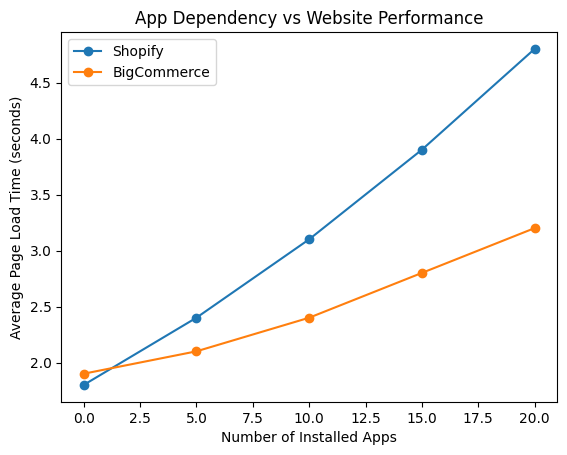
Shopify handles many SEO basics well, such as clean code, SSL, and mobile responsiveness. However, it has limitations around URL structure and can become performance-heavy when too many apps are installed. This can affect Core Web Vitals if not managed carefully.
BigCommerce provides more flexibility in URL customisation and includes stronger native SEO features. Because it relies less on apps, performance is often more predictable, especially for large stores.
The Real Cost Comparison: What You Actually Pay Over Time
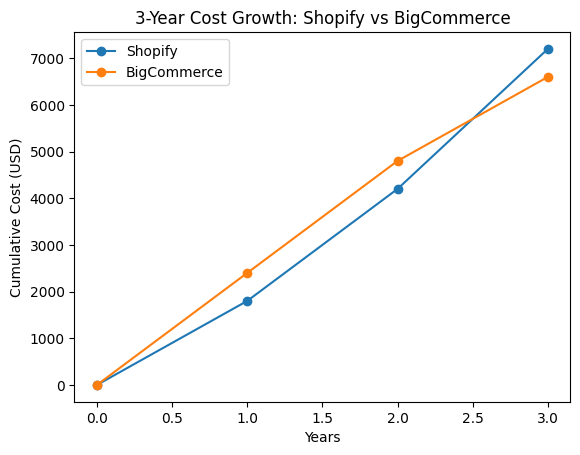
One of the most misunderstood aspects of the Shopify vs BigCommerce debate is pricing. Entry-level costs can be misleading.
Shopify typically has lower starting plans, which makes it attractive initially. However, as businesses grow, they often add paid apps for SEO, subscriptions, analytics, and automation. Transaction fees may also apply depending on payment gateways.
BigCommerce plans are generally more expensive upfront and include revenue-based thresholds. While this can feel restrictive, many features are built in, reducing the need for paid apps.
Payments, Checkout, and Conversion Experience
Checkout experience has a direct impact on conversion rates. Shopify offers a highly optimised checkout and benefits from Shopify Payments, which simplifies payment processing in many regions. However, checkout customisation is limited unless you are on higher-tier plans.
BigCommerce allows greater checkout customisation and does not charge additional transaction fees for third-party gateways. This flexibility is valuable for international brands and B2B sellers who require customised payment flows.
B2B, International Selling, and Complex Use Cases
BigCommerce has a clear edge in B2B ecommerce. Features such as customer-specific pricing, bulk ordering, and account-based purchasing are built in. Shopify can support B2B workflows, but usually through apps or custom development.
Shopify excels in international expansion. Its localisation tools, currency handling, and market-specific configurations make it easier for brands to scale globally.
Common Mistakes Businesses Make When Choosing
Many businesses choose Shopify because it is popular or BigCommerce because it sounds enterprise-ready. Both approaches are flawed. The most common mistake is ignoring long-term operational and SEO implications.
Platform choice should be based on how your business actually works, not on brand perception.
So, Which Platform Should You Choose?
If you value speed, ease of use, and ecosystem flexibility, Shopify is often the right choice. If your business requires complex workflows, B2B capabilities, or tighter control with fewer external dependencies, BigCommerce may serve you better.
The best ecommerce platform is not the most popular one. It is the one that aligns with your growth strategy.
How Web Pundit Helps Businesses Choose Right
At Web Pundit, we work with businesses at different stages of growth. Our role is not to push a platform, but to help brands choose and build on the right foundation. From platform consulting and development to SEO-safe migrations and performance optimisation, we focus on long-term outcomes, not short-term convenience.
In the Shopify vs BigCommerce debate, there is no universal winner. Both platforms are capable, powerful, and future-ready in 2026. The real differentiator is how well the platform aligns with your business model, technical needs, and growth plans.
Making the right choice early can save you years of rework and unnecessary expense later.

