Top Digital Marketing Trends in 2026
Explore the top digital marketing trends in 2026, backed by data, stats, and real-world examples. Learn how AI, video, privacy, and personalization will shape marketing success.

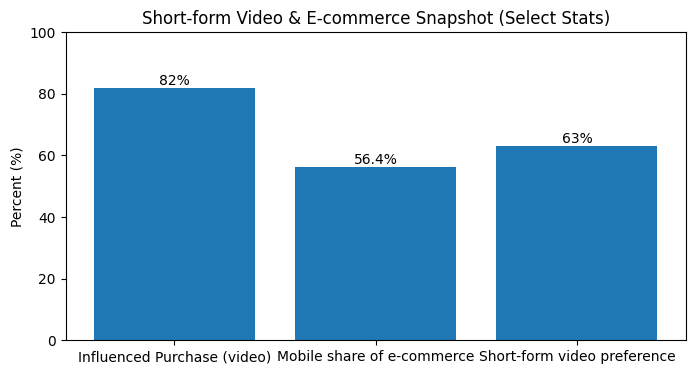
Digital marketing keeps changing the rules — and 2026 is the year those rules turn into playbooks. If 2025 taught us anything, it’s that the winners won’t be the brands that adopted the loudest tech first, but the ones that used intelligence, privacy, and storytelling together to create experiences people actually want. This Web Pundit guide gives you a tactical roadmap: ten high-impact trends, concrete stats, vivid examples, and action items you can put into play this quarter. I’ve included two visualizations (AI adoption trend + short-form video snapshot) you can download and reuse below.
Why 2026 is different?
2026 isn’t the year of single technology domination. It’s the year of integration: generative AI + first-party data + privacy-safe measurement + immersive experiences. Expect winners to be brands that make models, dataand experience work together — not brands that treat AI as a copy-and-paste solution.
Trend 1 — Generative AI becomes the marketing engine (not just a helper)
What’s happening: Generative AI moved from novelty to backbone. Teams use LLM agents to generate campaign concepts, write variants, create personalized video scripts, and automate near-real-time A/B tests. McKinsey and other surveys show near-ubiquitous enterprise uptake, with many organizations now using AI in at least one business function.
Why it matters: Scale and speed. A single prompt can produce dozens of test-ready headlines, audience hooks, and storyboard ideas. But speed without guardrails creates brand risk — bad claims, hallucinations, or tone mismatch.
Example: A D2C skincare brand uses a single AI workflow: brand brief → 12 short-video scripts → localized language variants → ad-level image/video frames. Each variant is tested programmatically, and winning creatives are fed into the next campaign. ROI: faster creative cycles and a measurable 18–30% uplift in CTR for personalized variants (example workflow used by many marketing teams in 2025).
Practical play: Build a “prompt lab” and a small governance checklist (brand safety, factual verification, creative constraints). Train 2–3 people in prompt engineering and run high-frequency creative tests.
Trend 2 — Hyper-personalization at scale via first- and zero-party data
What’s happening: With third-party cookie uncertainty, brands are double-downing on first- and zero-party data. Surveys show marketers prioritize direct data collection and tactics that reward users for sharing preferences.
Why it matters: Personalization increases relevance and conversion — but it must be consensual and transparent. In 2026, personalization is measured not just by clicks, but retention, CLTV, and reduced ad waste.
Example: A fitness app uses onboarding surveys (zero-party data), in-app behavior, and consented email interactions to create micro-segments. Instead of “Fitness Lovers 18–34,” they target “Morning HIIT Converts who prefer 20-minute sessions” and serve dynamic workout videos and product bundles.
Practical play: Audit current data capture points (newsletter, checkout, app onboarding). Add one friction-reducing micro-survey that captures an actionable preference for segmentation this month.
Trend 3 — AI-driven creative production: video, voice, and synthetic assets
What’s happening: Generative video, voice cloning, and automated editing moved into production. Brands are now able to produce localized, personalized video assets faster and at lower cost.
Why it matters: Video is attention’s currency — short, punchy, and native to each platform. In 2025 short video formats further dominated watch time and influenced purchase behaviour. Brands that can scale quality video win attention.
Example: A B2B SaaS company turned analyst reports into 30-second explainer clips for LinkedIn and 9-minute deep dives for YouTube. Those short clips drove higher lead magnet downloads and increased MQL conversion by making whitepapers immediately consumable.
Practical play: Identify 3 evergreen assets (case study, explainer, product demo) and create a pipeline to convert them into short and long-form video variants using an AI-assisted editor.
Trend 4 — Search becomes conversational and semantic
What’s happening: Search engines and AI assistants prioritize intent and semantic understanding. SEO is shifting from keyword density to entity authority, structured data, and helpful answers surfaced in AI summaries.
Why it matters: Ranking for assistant-driven answers (the snippets or AI summaries) can drive significant referral traffic. Brands must optimize for queries, not only keywords.
Example: Retailers add structured FAQs, product FAQs enhanced with schema, and craft “concise answer” snippets to increase the chance of being surfaced in AI-powered search.
Practical play: Run an audit of your site’s schema markup, add one FAQ-rich page per product, and optimize content to answer intent-led questions.
Trend 5 — Social commerce & shoppable short-video explode
What’s happening: Social platforms are reducing friction between discovery and purchase. Shopify, big retailers, and platforms integrated AI shopping experiences — shoppers used AI-assistants to find products during the 2025 holiday season, contributing to record online spend.
Why it matters: The path to purchase compresses. Brands must design content that not only entertains but converts — overlays, live shopping, and shoppable tags within short-form videos are now conversion channels.
Example: A fashion brand hosts weekly live drops on Reels and syncs inventory to shoppable posts. They introduced exclusive, limited-time bundles during live sessions, boosting conversion rates and AOV.
Practical play: Enable shoppable tags where possible, and test a live shopping or shoppable reel event for one product line in the next 60 days.
Trend 6 — Privacy-first measurement & cookieless targeting
What’s happening: The “cookieless future” isn’t canceled - it evolved. Chrome’s Privacy Sandbox and industry responses forced marketers to adopt privacy-safe measurement, server-side tagging, and contextual strategies. Vendors and platforms now offer cookieless attribution pathways, but the onus is on brands to collect and manage first-party signals.
Why it matters: Measurement changes how budget is allocated. Relying on old attribution models creates blind spots. Brands with resilient measurement (incrementality tests, media mix models, and privacy-first attribution) maintain better ROAS.
Practical play: Implement or partner for a privacy-first measurement stack. Run a small incrementality test to validate paid channel impact outside cookie-based last-click.
Trend 7 — Video continues to be the dominant attention channel
What’s happening: Consumers prefer video for learning and buying. Short videos under 90 seconds show superior retention and influence - across platforms short-form formats are the most efficient attention grabs. Multiple reports indicate video influenced purchase decisions for a large majority of consumers.
Why it matters: If you’re not producing short-form video you’re leaving audience and conversions on the table.
Example: A household FMCG brand reduced its long TV budget and invested in a pipeline of 10–12 short-form iterations per hero creative distributed across platforms; they measured 2.5× engagement lift on social and better efficiency in driving lower-funnel conversions.
Practical play: Produce platform-specific short-form content - not one “square” asset repurposed. Optimize hooks for 3–5 seconds and measure at the creative level.
Trend 8 — Immersive experiences: AR, VR, and the metaverse, with practical pilots
What’s happening: AR try-ons and VR product demos are now pragmatic marketing tools moved from novelty to utility in certain categories (fashion, furniture, real estate). While the metaverse is still nascent, hybrid immersive events create strong PR and engagement wins.
Why it matters: Immersive tech reduces friction for certain purchase decisions (e.g., “try before you buy” for furniture or cosmetics), increasing conversion intent and reducing returns.
Example: An eyewear brand that introduced AR try-on saw significant reductions in return rates and higher purchase confidence.
Practical play: Run an AR try-on pilot for one hero SKU or build a VR demo for enterprise product demos. Measure time-to-decision and return rates.
Trend 9 — Community-led growth and owned audiences
What’s happening: With paid media more volatile and privacy changes shifting power, communities - private groups, forums, subscription models - return as reliable channels for engagement and feedback.
Why it matters: Owned community channels reduce CPM reliance, increase customer lifetime value, and generate product feedback that informs product-market fit.
Example: A B2B software brand created a customer council Slack and an invite-only webinar series; the council produced beta users, referrals, and 7 figure ARR expansion within 12 months.
Practical play: Create a community pilot: invite 100 high-value customers to a private group with unique content and direct access to product teams.
Trend 10 — Data-driven marketing & predictive analytics guide budgets
What’s happening: Predictive models and real-time dashboards are standard for organizations that want to scale efficiently. Marketers use propensity models to allocate spend and to forecast churn.
Why it matters: Prediction reduces waste and improves ROI allocation. It transforms marketing from reactive to proactive.
Example: An e-commerce brand used predictive churn modeling to trigger win-back flows and tailored offers; the approach reduced churn by measurable margins and increased reactivation revenue.
Practical play: Prioritize building a small predictive model for one key metric (e.g., churn or probability-to-purchase) using the last six months of data.
The data behind the trends
- AI adoption: 88% of organizations reported using AI in at least one function in 2025 (McKinsey — State of AI survey).
- Holiday e-commerce growth: U.S. online holiday spending hit $257.8 billion in 2025, with AI-enabled shopping playing a notable role. Mobile accounted for 56.4% of online transactions during that season.
- Video influence: 82% of consumers report that online video influenced a purchase decision. Short-form videos retain significant viewer attention and have become a major revenue driver for social ad formats.
- Short-video preference: Surveys show a majority (roughly two-thirds in many market studies) prefer short-form video from creators for discovery and learning; platform native formats dominate engagement.
- Privacy & cookieless: Industry analysis and vendor guidance emphasize privacy-first approaches with first-party signals and contextual targeting as practical responses to browser-level changes.

8 Tactical priorities for your next 90 days
- Launch a prompt lab & creative governance — 2 people, checklist, and 4 weekly experiments.
- Collect one first-party preference at checkout (e.g., preferred content or product type). Use it to personalize emails.
- Create 3 platform-native short videos (TikTok/Shorts/Reels native edits) and A/B test hooks.
- Run a small incrementality test for one paid channel to validate measurement without cookies.
- Pilot an AR try-on or a short VR demo for a high-consideration SKU.
- Spin up a private community pilot for customers and send them exclusive content.
- Build a single predictive model for one KPI (churn or purchase propensity).
- Document AI guardrails and brand-safety prompt guidelines.
Final word — strategy over hype
Tech without strategy is noise. 2026 will reward teams that build disciplined processes around AI, data, and privacy - then channel that capability into better customer experiences. The Web Pundit approach is simple: pick two bets (one on AI workflows, one on first-party data + community), measure aggressively, and iterate faster than your competition.


