Web Development Trends in 2026: What Businesses Must Prepare For.
Discover the most important web development trends in 2026 and what they mean for business growth, SEO, performance, and conversions. Built for decision-makers.
Web development in 2026 is no longer about chasing shiny new technologies or adopting trends for the sake of innovation. It is about building websites that are fast, scalable, search-friendly, and conversion-focused in an increasingly competitive digital environment.
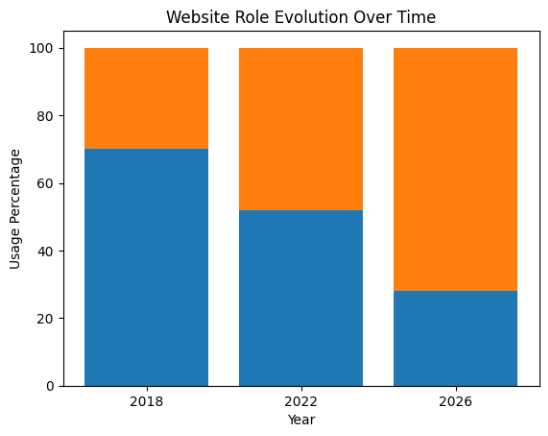
For businesses, a website is no longer a digital brochure. It has become the first point of trust, the primary lead-generation channel, and often the deciding factor between a user choosing you or your competitor. As user expectations rise and search engines become more experience-driven, websites that fail to evolve will quietly disappear from visibility.
This blog explores the most important web development trends in 2026 from a business and growth perspective, not from a purely technical or developer-centric lens.
Why Web Development Trends Matter More in 2026
In previous years, businesses could afford to delay website upgrades or ignore modern development practices. In 2026, that approach carries real risk.
Users expect websites to load instantly, function smoothly on mobile devices, and clearly communicate value within seconds. Search engines expect websites to meet performance, accessibility, and experience benchmarks. AI-powered search engines prioritize clarity, structure, and usefulness over keyword-heavy content.
A slow or outdated website does not simply look unprofessional. It directly affects search rankings, bounce rates, lead quality, and brand trust.
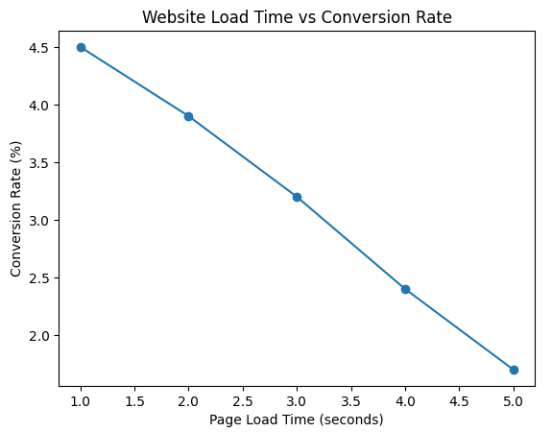
Research consistently shows that more than 50 percent of users abandon a website if it takes longer than three seconds to load. As competition increases, that tolerance continues to shrink.
Trend #1: AI-Assisted Web Development Becomes the Standard
By 2026, artificial intelligence is deeply integrated into web development workflows. Businesses use AI tools to generate layouts, scaffold code, write basic content, and accelerate deployment timelines.
This shift has significantly lowered the barrier to launching a website. However, faster does not always mean better.
While AI can help create websites quickly, most AI-generated websites lack the strategic foundation required for long-term performance. They often miss critical SEO structures, performance optimization, and conversion-focused UX design.
From a business perspective, the real risk lies in assuming that an AI-built website is automatically ready for growth.
Trend #2: Performance-First Websites Define Visibility
Website performance has moved from being a technical consideration to a direct growth factor. In 2026, speed and responsiveness directly influence search visibility, engagement, and conversion rates.
Google’s Core Web Vitals are no longer optional benchmarks. They are a baseline requirement for competitive rankings. Websites that fail to meet these metrics struggle to appear consistently in search results, regardless of how good their content may be.
Even a one-second delay in page load time can reduce conversions by up to seven percent. Faster websites consistently outperform slower competitors in organic traffic, lead generation, and user retention.
Trend #3: Meta-Frameworks Replace Traditional Website Builds
Traditional website setups that separate frontend, backend, and optimization layers are slowly being replaced by modern meta-frameworks. These frameworks combine performance optimization, routing, rendering, and scalability into a single development approach.
For businesses, this results in faster websites, cleaner architecture, and stronger SEO foundations. It also allows teams to scale features without rebuilding the entire platform.
However, not every business needs this approach. The key is aligning the technology choice with business growth goals rather than following trends blindly.
Trend #4: Headless and API-First Architectures Go Mainstream
In 2026, more businesses are separating content management from presentation layers. Headless architectures allow content to be managed in one place and delivered across multiple platforms such as websites, landing pages, apps, and dashboards.
This approach benefits content-heavy businesses, e-commerce brands, and companies planning rapid expansion across channels.
The business advantage lies in flexibility. Teams can update content faster, launch campaigns more efficiently, and maintain consistency across platforms without duplicating effort.
That said, headless architecture introduces complexity and should only be adopted when the business truly needs it.
Trend #5: SEO Evolves from Keywords to Experience
Search engine optimization in 2026 is less about keyword density and more about user experience. Search engines increasingly evaluate how users interact with a website, how clearly information is presented, and how well the page satisfies intent.
High-performing pages tend to have:
- Clear structure
- Fast load times
- Logical navigation
- Meaningful engagement
For businesses, this means SEO and web development can no longer operate in isolation. Performance, design, and content strategy must work together.
Trend #6: Mobile-First Becomes Mobile-Only
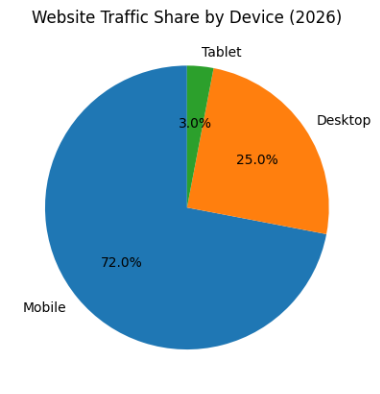
Mobile traffic dominates digital interactions in 2026. Websites designed primarily for desktop experiences struggle to retain mobile users and often fail to convert effectively.
Mobile-first design is no longer a strategy. It is the default expectation.
Businesses that prioritize mobile usability see higher engagement, lower bounce rates, and stronger brand perception.
Trend #7: Accessibility and Compliance Become Business Essentials
Accessibility is no longer limited to ethical considerations. In 2026, it is a usability, reach, and compliance requirement.
Accessible websites are easier to use, rank better in search engines, and reach wider audiences.
Trend #8: Websites Become Growth Engines, Not Brochures
Modern websites are expected to guide users through journeys, capture leads intelligently, and support business goals.
In 2026, successful websites function as:
- Sales funnels
- Trust-building platforms
- Conversion engines
This requires clear CTAs, intelligent forms, analytics integration, and continuous optimization.
Final Thought: Preparing Without Overbuilding
The biggest mistake businesses make is rebuilding websites without clarity. Trends should guide decisions, not dictate them.
The real question is not which web development trends exist in 2026, but which ones make sense for your business goals, audience, and growth stage.


