International SEO Guide: How to Rank When You Sell Across Countries and Languages in 2026
This international SEO guide covers hreflang, site structure, localization, and country targeting so your business ranks across languages and markets in 2026.
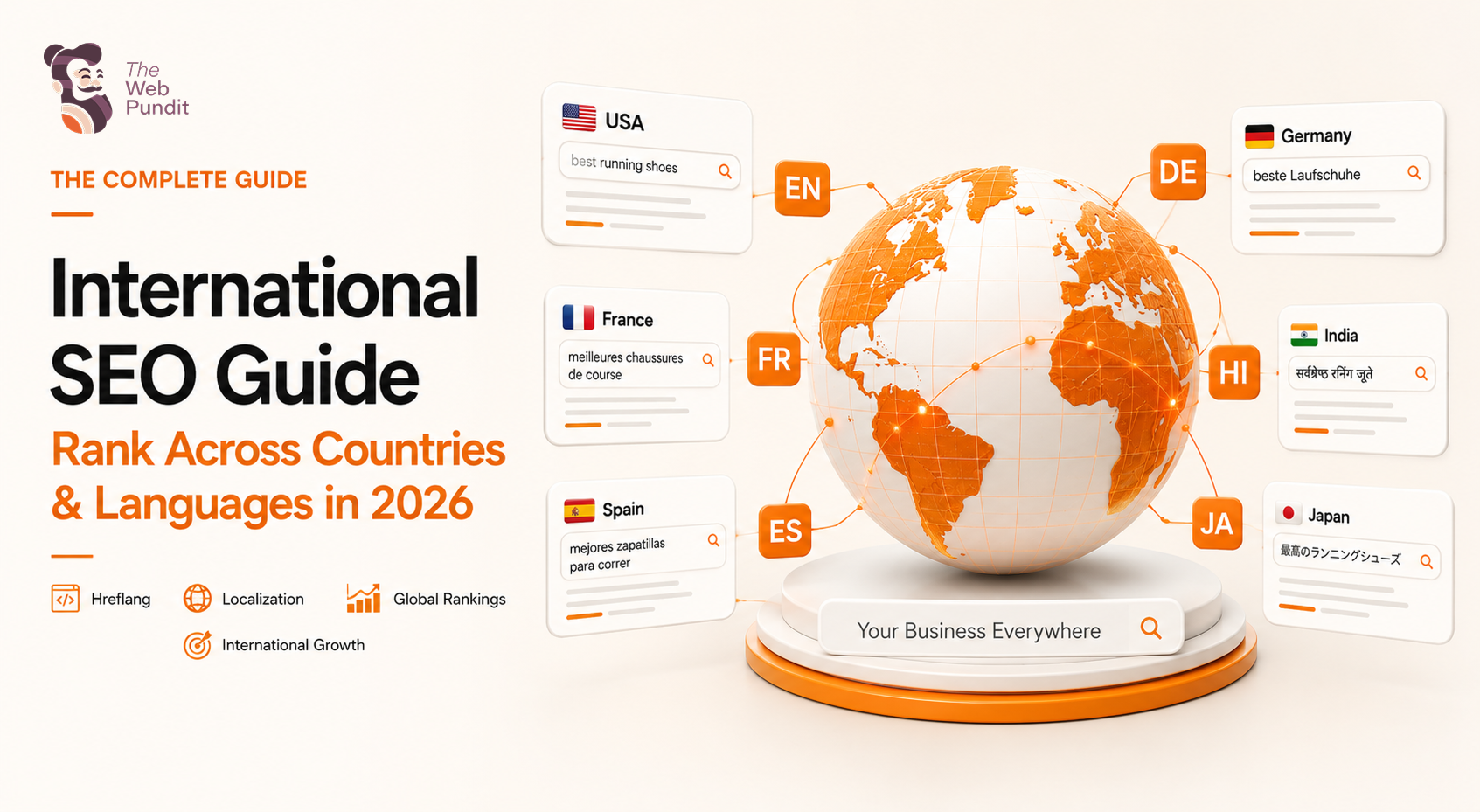
Your website ranks beautifully at home. Then you expand into a new country, point your existing site at the new market, and wait for the traffic. It does not come. Your pages either fail to show up at all, or worse, Google shows the wrong version to the wrong country, sending your German customers to your English pages and confusing everyone. This is the moment most businesses discover that going global is not the same as being online, and it is exactly the problem this international SEO guide is built to solve.
International SEO is the practice of optimizing your website so search engines understand which countries and languages you are targeting, and show the right version of your content to the right people. It is the difference between quietly existing in a foreign market and actually ranking in it. Get it right and you unlock entire new audiences; get it wrong and you can accidentally sabotage the home rankings you already have.
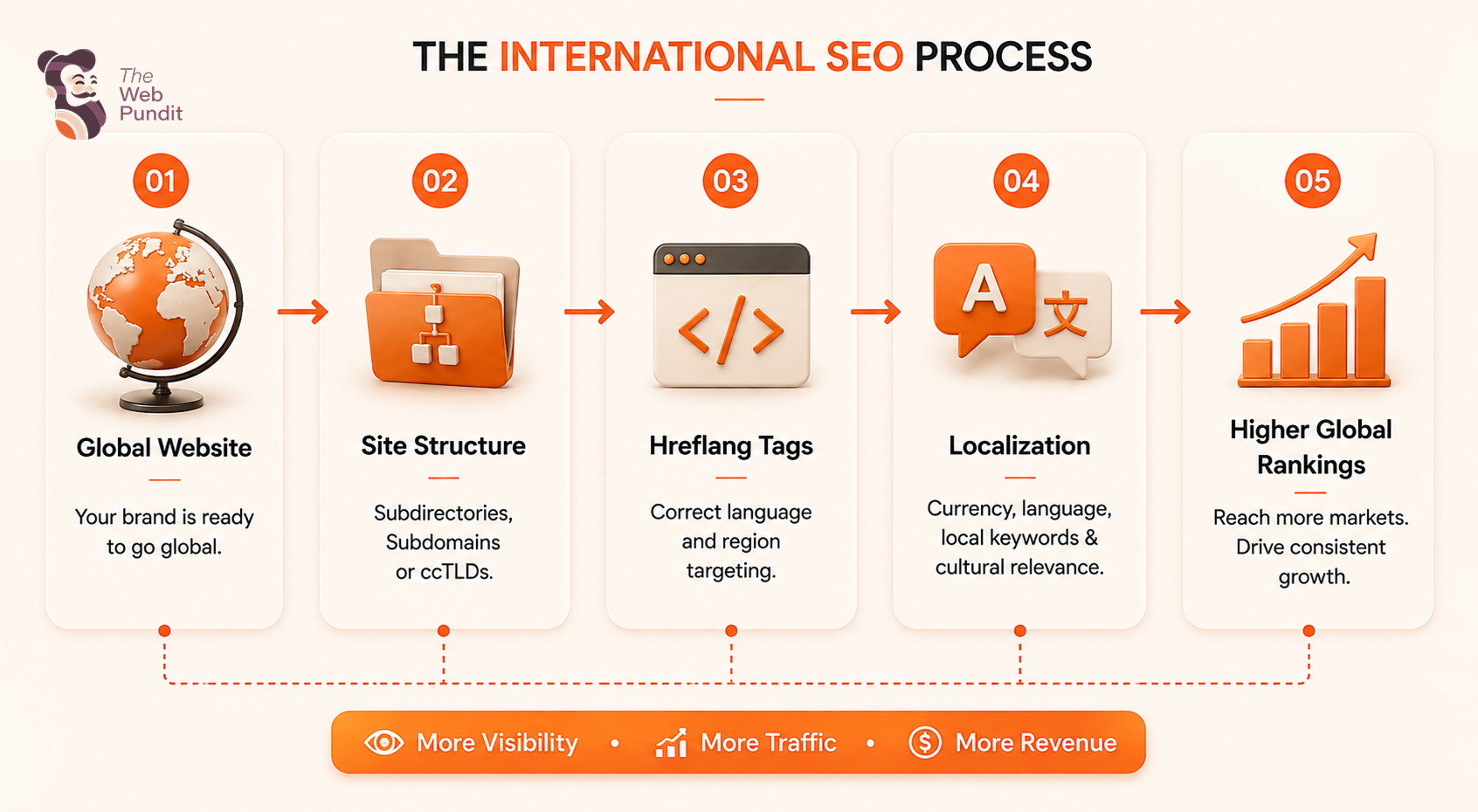
The challenge is that international SEO combines several moving parts, site structure, hreflang tags, localization, and country targeting, that all have to work together. Miss one and the others underperform. This international SEO guide breaks each part down in plain language, in the order you should tackle it, so you can expand into new markets without the guesswork or the costly mistakes.
What Is International SEO and How It Differs From Local SEO
International SEO is the process of making your website easy for search engines to serve to users in different countries or languages. It tells Google, in effect: this page is for English speakers in the US, that one is for German speakers in Germany, show each to the right audience.
A common point of confusion, raised often in SEO communities, is how this differs from local SEO. The two are almost opposites. Local SEO helps a single business rank in one specific area, think a Bangalore bakery ranking for "bakery near me." International SEO helps one business rank across many countries or languages at once. Local SEO is about depth in one place; international SEO is about reach across many. This international SEO guide focuses squarely on that second challenge: showing up correctly in multiple markets.
Understanding this distinction matters because the tactics differ completely. Local SEO leans on Google Business Profiles and local citations. International SEO leans on site architecture, hreflang, and localization, which is where we go next.
Step 1: Choose the Right International Site Structure
Before anything else, you need to decide how your international content is organized, because every other decision builds on this. There are three main options, and choosing well is one of the most important calls in any international SEO guide.
Country-code top-level domains (ccTLDs) use separate domains per country, like example.de for Germany and example.fr for France. They send the strongest geo-targeting signal and build clear local trust, but they are expensive to maintain and each domain builds authority from scratch.
Subdirectories keep everything on one domain, like example.com/de/ and example.com/fr/. They are the most popular choice because they are cost-effective, consolidate your domain authority, and are simpler to manage. For most businesses starting out, subdirectories are the pragmatic pick, a point echoed repeatedly in Reddit's technical SEO threads.
Subdomains sit in between, like de.example.com. They separate markets cleanly but split authority somewhat, like ccTLDs.
There is no universally correct answer, but for most businesses the subdirectory approach offers the best balance of cost, simplicity, and SEO strength. Choose based on your resources and how distinct each market truly is, since this one decision shapes every later step of your international SEO work.
Step 2: Get Hreflang Tags Right
If there is one technical element that defines international SEO, it is hreflang. Hreflang is a small piece of code that tells search engines which language and region each version of a page is meant for. It is how Google knows to show your Spanish page to searchers in Spain and your English page to searchers in the US, instead of mixing them up, and getting it right is central to any international SEO guide.
Hreflang comes up in nearly every international SEO discussion online, and for good reason: it is powerful and easy to get wrong. The core rules are straightforward. Each page should list all its language and region variations, including itself. The tags must be reciprocal, so if page A points to page B, page B must point back to page A. And you should use correct language and country codes (like en-gb for English in the UK, or de-de for German in Germany).
That said, do not add hreflang where you do not need it. As one r/TechSEO thread wisely noted, hreflang only makes sense when you genuinely have multiple language or regional versions of the same content. If you serve one language to one market, you can skip it. This international SEO guide treats hreflang as essential only when you actually run parallel versions, which is the situation it was designed for.
Step 3: Localize, Do Not Just Translate
Here is where many businesses cut a corner that quietly costs them. They run their site through an auto-translation tool and call it international. Search engines and users both see straight through this.
Localization means adapting your content to genuinely fit each market: proper human-quality translation, local currency and units, culturally relevant examples, local spelling (color versus colour), and keyword research done fresh in each language. A phrase that gets searched constantly in one country may have no equivalent search demand in another, or a completely different phrasing. As r/webdev contributors stressed, translate content properly rather than relying on auto-translation, and keep every language version fully indexable.
The keyword point deserves emphasis. Do not translate your keywords; research them natively. People in different countries search for the same product using different words, and only local keyword research reveals what they actually type. This is one of the highest-value steps in the entire international SEO guide, because it aligns your content with real demand in each market rather than guessing.
Step 4: Target Countries and Languages Correctly
A key decision is whether you are targeting by language, by country, or both. Targeting Spanish speakers everywhere is different from targeting Spain specifically. A single Spanish page might serve all Spanish-speaking countries, or you might need separate pages for Spain, Mexico, and Argentina if the markets differ enough.
Use Google Search Console's international targeting settings where relevant, keep your hreflang aligned with your strategy, and build local signals: local backlinks, local hosting or a strong CDN, and local business information where you have a presence. These signals reinforce which market each part of your site serves. Getting this targeting layer right is what turns the technical setup from this international SEO guide into actual rankings in each country.
A Real-World Example of International SEO in Action
Picture a mid-sized ecommerce brand based in the US that wants to expand into Germany and France. It already ranks well at home. The founder's instinct is to just translate the site and switch it on. Here is how doing it properly changes the outcome.
First, structure. Instead of buying separate .de and .fr domains and starting authority from zero, the brand uses subdirectories: example.com/de/ and example.com/fr/. The existing domain's authority now supports the new markets from day one. Second, hreflang. Each product page lists its English, German, and French versions reciprocally, so Google serves German shoppers the German page rather than the English one. Third, localization. Prices show in euros, sizes convert to European standards, and the copy is translated by humans, not a plugin. Crucially, the brand runs fresh keyword research in German and finds that shoppers there search for the product with a different phrase than a direct translation would suggest, so the German pages target the real local term.
The result is not just "a translated site." It is three properly targeted storefronts, each ranking for what its market actually searches, all reinforcing one domain. This is what an international SEO guide is really describing: not translation, but a system that makes each market feel native while compounding your overall authority. The brand that does this beats the competitor who simply auto-translated and hoped.
Tools and Signals That Support International SEO
You do not need a huge budget to execute this well, but a few tools and signals make the work far more reliable. Google Search Console is essential; its international targeting features and coverage reports show you how Google is interpreting your setup and flag hreflang errors before they cost you rankings. A dedicated hreflang generator or validator helps you produce and check tags, since manual hreflang is where most mistakes creep in.
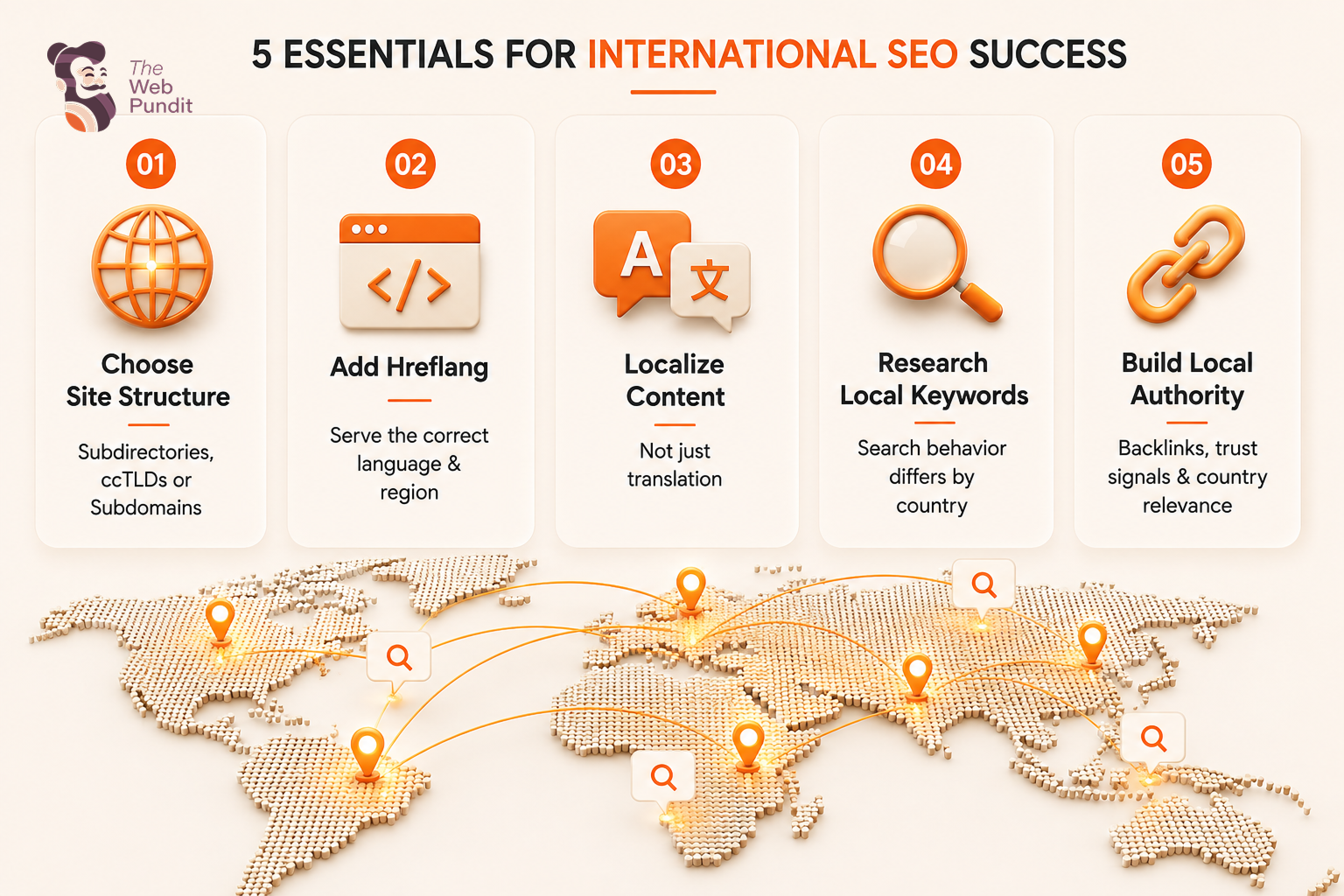
For keyword work, use a keyword tool that supports country-level and language-level data, because search volume for the same concept varies enormously between markets. On the technical side, fast local-feeling performance matters: a good content delivery network serves your pages quickly worldwide, and local hosting or local backlinks reinforce which market you serve. None of these replace the fundamentals in this international SEO guide, but together they turn a correct strategy into a smoothly running one. Start with Search Console and a hreflang validator, then add the rest as your international footprint grows.
Common International SEO Mistakes to Avoid
Several mistakes show up again and again. Relying on auto-translation instead of real localization. Setting up hreflang tags that are not reciprocal or use wrong codes, the most common technical error by far. Adding hreflang when you do not actually have multiple versions. Translating keywords instead of researching them natively. Letting some language versions become un-indexable or thin. And expecting a brand-new ccTLD to rank instantly, when it has to build authority from zero. Avoiding these keeps your expansion on track and protects the home rankings you already have.
How Long Does International SEO Take to Work?
As with all SEO, expect a gradual climb rather than an instant result. If you use subdirectories on an established domain, new market pages often benefit from your existing authority and can gain traction within a few months. Fresh ccTLDs take longer because they start from scratch. The technical setup, hreflang and structure, can be done quickly, but the ranking payoff follows the usual SEO rhythm of months, not days. The businesses that set the foundation correctly early avoid painful re-dos later.
The Bottom Line
Expanding into new countries is one of the biggest growth opportunities a business can pursue, but only if search engines can serve the right content to the right people. That is the entire job of international SEO: clear site structure, correct hreflang, genuine localization, and precise country targeting, working together.
Follow this international SEO guide step by step, resist the temptation to shortcut localization, and get your hreflang right, and you turn a foreign market from a place you technically exist into a place you actually rank. Done well, international SEO does not just add traffic; it opens entire new revenue streams that compound for years.

.png)
