Link Building Techniques That Still Work in 2026 (Without Getting Your Site Penalized)
Understand link building techniques that still work in 2026, how to earn backlinks safely, avoid penalties, and know how many links you actually need.
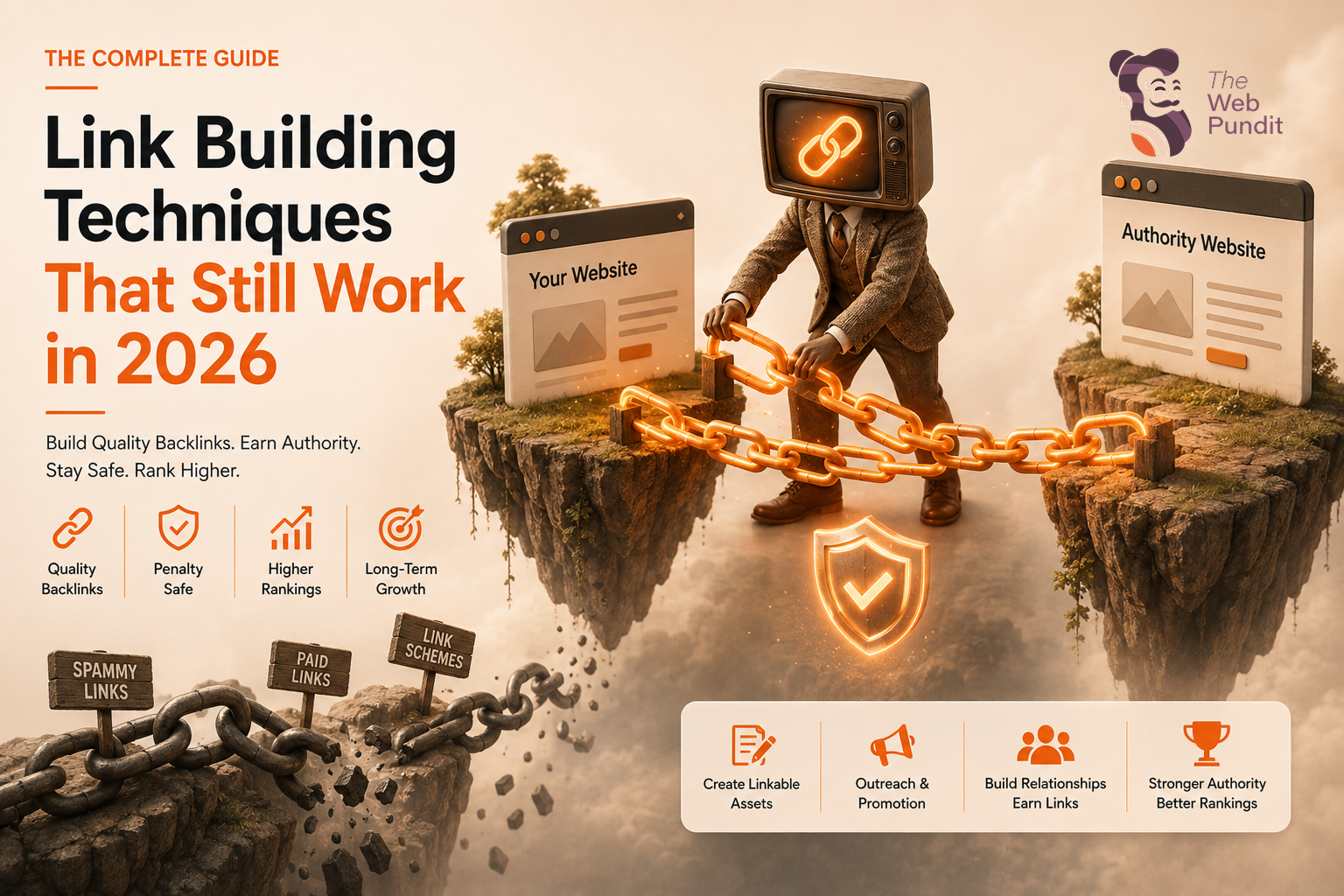
Ask any room full of SEOs what the hardest part of the job is, and backlinks come up every single time. Year after year, link building remains the number one question in the SEO community, precisely because it is both essential and easy to get wrong. Do it well and your rankings climb steadily. Do it badly, by buying spammy links or chasing volume, and you can trigger a penalty that erases months of work overnight.
The rules have tightened. The old playbook of mass directory submissions, link exchanges, and cheap bulk backlinks does not just fail now; it can actively hurt you. Google has spent years learning to spot manipulative patterns, and it rewards genuine authority over gamed metrics. So the question is no longer how to get the most links. It is which link building techniques still earn trust in 2026 without putting your site at risk.
This guide answers exactly that. We will cover what link building actually is, the techniques that still work, how to stay penalty-safe, how many backlinks you really need (a question that dominates every SEO forum), and the tools that make the work manageable. Since we cover the basics of backlinks in our dedicated backlinks guide, this piece focuses on the practical techniques and the safety rules around them.
What Link Building Actually Is (and Why It Still Matters)
Link building is the practice of getting other websites to link to your pages. Each quality backlink acts like a vote of confidence, telling search engines that other credible sites find your content worth referencing. Those votes remain one of Google's strongest ranking signals.
A fair question, asked constantly, is whether link building still matters in an era of AI search and constant algorithm updates. The answer is yes, with a shift in emphasis. Links still carry enormous weight, but the standard for what counts has risen sharply. One relevant link from a respected site now outweighs hundreds of low-quality ones. Modern link building techniques are therefore less about quantity and more about earning genuine, relevant endorsements. That shift is the single most important thing to understand before you build a single link.
The Link Building Techniques That Still Work in 2026
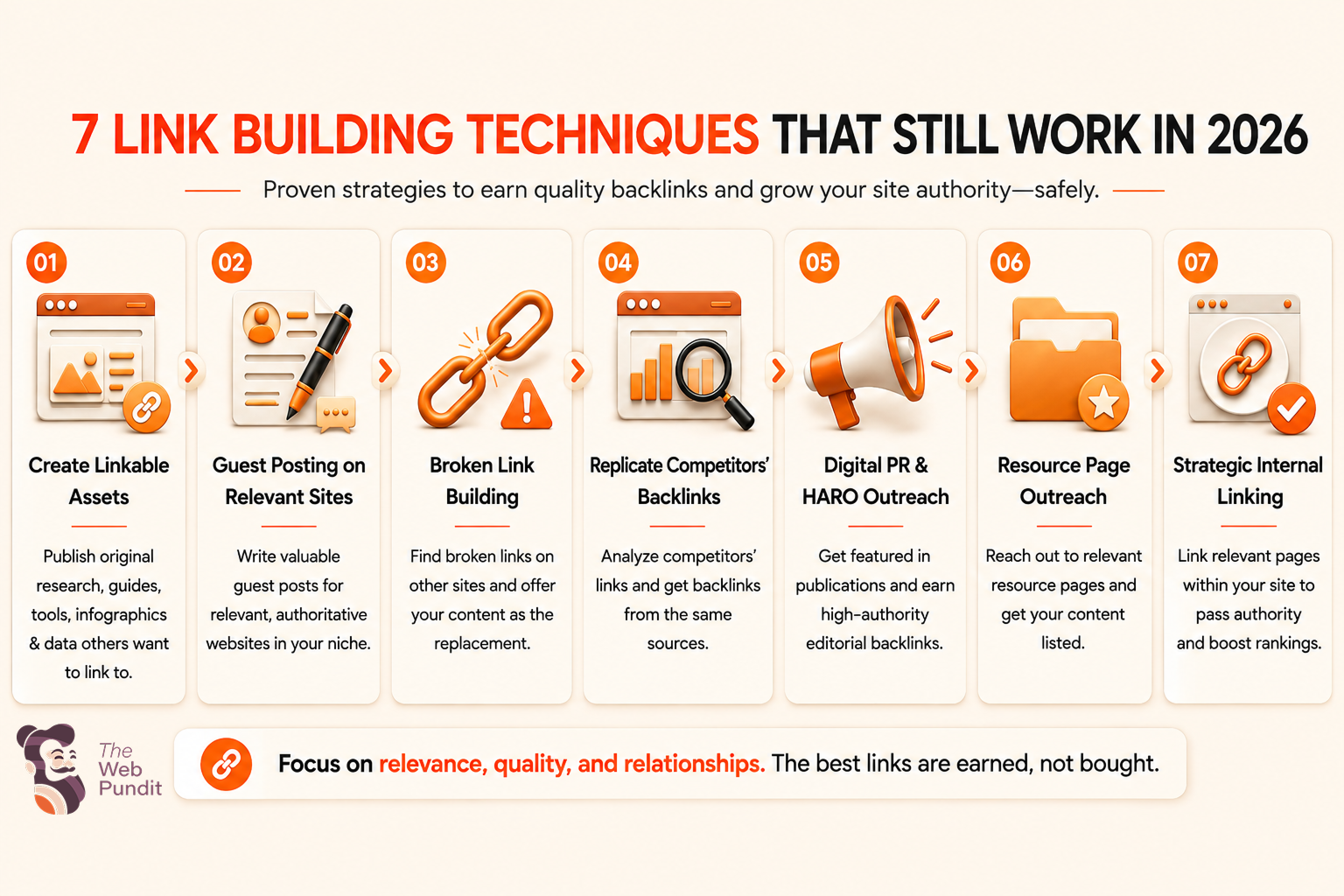
Not every tactic survives. Here are the link building techniques that continue to deliver results while keeping you on the right side of Google's guidelines. Work through them roughly in order of accessibility.
1. Create genuinely linkable assets
The most durable link building technique is to make content worth linking to. Original research, useful data, free tools, in-depth guides, and infographics all give other sites a reason to reference you naturally. This is the foundation, because every other technique becomes easier when you have something genuinely valuable to point people toward.
2. Guest posting on relevant sites
Guest posting still works when done for the right reasons: reaching a relevant audience and earning a contextual link from a respected site in your field. The key is relevance and quality, not volume. A guest post on a topically related, credible site is worth far more than dozens on unrelated blogs. This remains one of the most reliable link building techniques when approached with genuine value rather than link-dropping.
3. Broken link building
This clever technique involves finding broken links on other websites, then offering your relevant content as the replacement. You help the site owner fix a dead link, and you earn a backlink in return. It is a genuine win-win, which is exactly why it remains one of the most respected link building techniques among practitioners.
4. Replicate competitors' backlinks
If a site links to your competitor, it may well link to you. Analyzing where competitors earn their backlinks reveals realistic, relevant opportunities you can pursue with your own better content. This is one of the smartest link building techniques because it points you toward sites already proven to link within your niche.
5. Digital PR and HARO-style outreach
Getting quoted in publications and responding to journalist requests earns powerful, editorial backlinks from high-authority news and industry sites. These are among the most valuable links you can get because they are genuinely earned and hard to fake. Digital PR has become one of the defining link building techniques of the modern era.
6. Resource page outreach
Many sites maintain resource pages listing helpful links on a topic. If your content genuinely fits, a polite outreach email suggesting it can earn a clean, relevant link. It is straightforward and, when your content truly belongs there, effective.
7. Strategic internal linking
Often overlooked, internal links (from your own pages to your other pages) are entirely within your control and help distribute authority across your site. While not backlinks in the traditional sense, they amplify the value of the external links you earn, making them a quiet but essential part of any link building techniques toolkit.
How to Build Links Without Getting Penalized
This is where many businesses get into trouble. The same drive that builds authority can, taken too far or done cheaply, trigger a Google penalty. Staying safe comes down to a few firm rules.
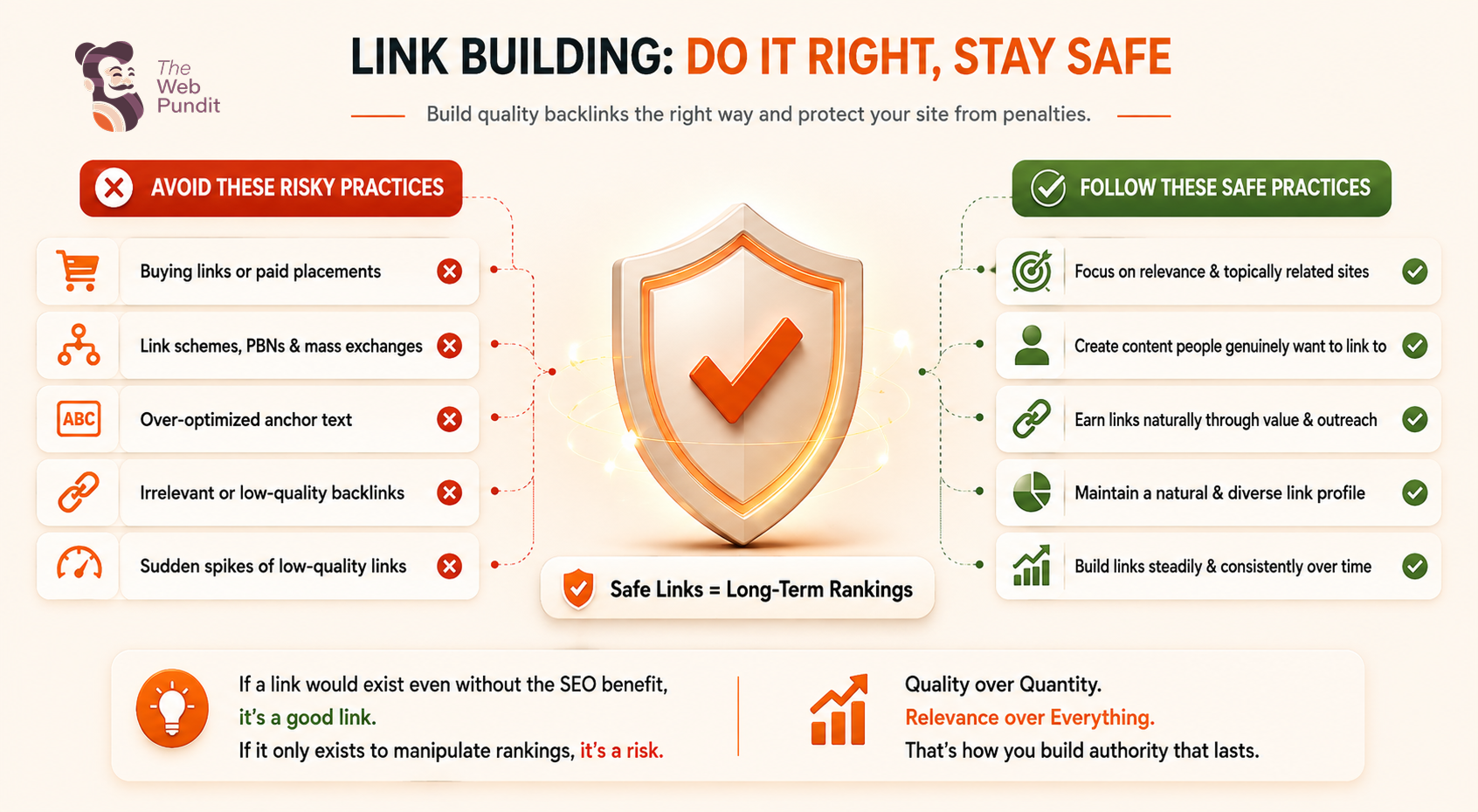
Avoid buying links or joining link schemes. Paid links that pass ranking signals violate Google's guidelines and are increasingly easy to detect. Steer clear of private blog networks and mass link exchanges, which are classic manipulation patterns. Keep your link profile natural, meaning a healthy mix of sources and anchor text rather than hundreds of identical exact-match anchors, which looks engineered. And prioritize relevance above all: a link from a site related to your topic is safe and valuable, while a flood of unrelated links looks suspicious.
The safest mindset is simple. If a link would exist even without the SEO benefit, because the content genuinely deserves it, it is a good link. If it only exists to manipulate rankings, it is a risk. Every technique above passes that test, which is why they endure while shortcut tactics get penalized.
How Many Backlinks Do You Actually Need?
This is the question that dominates every link building discussion online, and the honest answer frustrates people: it depends. It depends on your niche, your competition, and the strength of your existing authority.
The Reddit consensus across multiple threads is refreshingly practical. For an average mid-tier website, a handful of quality backlinks a month, often cited as five to ten, is a reasonable, sustainable pace. Newer sites may need more to establish authority, and highly competitive niches demand significantly more. But the numbers people obsess over are less important than two truths that come up again and again: quality beats quantity, and link building is an ongoing process, not a task you finish. Sites do not reach a magic number and stop; they keep earning links as they grow.
So rather than chasing an arbitrary count, aim for a steady stream of relevant, quality links over time. That approach, using the link building techniques above, compounds far more reliably than any short burst of volume.
The Best Link Building Tools
You do not need an expensive stack to start, but a few tools make link building far more efficient. Backlink analysis tools show you your own link profile and, crucially, let you analyze competitors' backlinks to find opportunities. Outreach tools help you find contact details and manage email campaigns at scale. Broken-link checkers speed up the broken link building technique. And your own analytics and Search Console reveal which links actually drive traffic and how your authority is trending.
Start simple. A single backlink analysis tool covers most of what a beginner needs: seeing your links, studying competitors, and finding prospects. Add outreach and specialist tools as your program grows. The tools support the work, but the link building techniques themselves, and the relationships behind them, are what actually earn the links.
A Realistic Example of Steady Link Building
Consider a new SaaS business with almost no backlinks. Rather than panic-buying a hundred cheap links (the fastest route to a penalty), the founder takes the slow, safe road. In month one, she publishes a genuinely useful free tool and a data-driven report, her linkable assets. In month two, she analyzes three competitors' backlink profiles and finds a dozen relevant blogs and resource pages that link within her niche. She reaches out with a short, honest pitch offering her tool where it genuinely fits.
Over the next few months she lands a guest post on a respected industry blog, fixes two broken links on resource pages by offering her content as the replacement, and gets quoted once in a trade publication through a journalist request. By the end of six months she has perhaps twenty five quality, relevant backlinks, every one of them defensible and natural.
That is not a dramatic number, but it is the right kind. Her rankings rise steadily, her profile looks organic to Google, and nothing she did risks a penalty. This is what disciplined link building looks like in practice: patient, relevance-first, and built on assets worth linking to. Compare that to a competitor who bought two hundred links and watched his rankings collapse after the next update, and the case for doing it properly makes itself.
Where Beginners Should Start
If all of this feels like a lot, here is the honest shortcut for anyone just beginning. Do not try every technique at once. Start with two things: create one genuinely valuable piece of content worth linking to, and study where your competitors get their links. Those two moves alone will keep you busy and productive for weeks, and they are completely penalty-safe.
Once you are comfortable, layer in guest posting and a little outreach. Reddit's SEO veterans repeat a useful reality check here: expect outreach to be a numbers game, since only a fraction of pitches convert, so consistency matters more than any single email. Build the habit of earning a few good links each month rather than chasing a big burst, and the results compound. The businesses that treat link building as a steady, ongoing practice, not a one-time campaign, are the ones that quietly build authority their competitors cannot match.
Common Link Building Mistakes to Avoid
A few patterns reliably waste effort or invite penalties. Buying cheap bulk links, which is the fastest route to trouble. Chasing quantity over relevance and quality. Using identical exact-match anchor text everywhere, which looks manipulated. Ignoring your competitors' backlink profiles, which are a free roadmap. Doing a single burst of outreach then stopping, when link building rewards consistency. And neglecting the linkable assets that make every other technique easier. Sidestepping these keeps your link building techniques both effective and safe.
The Bottom Line
Link building in 2026 is harder to fake and more rewarding to do properly than ever. The techniques that endure, linkable assets, guest posting, broken link building, competitor analysis, digital PR, and resource outreach, all share one trait: they earn links that genuinely deserve to exist. That is precisely why they survive algorithm updates while manipulative shortcuts get punished.
Focus on quality over quantity, keep your profile natural, build steadily rather than in risky bursts, and let your best content do the heavy lifting. Master these link building techniques and you build the kind of durable authority that lifts rankings and, increasingly, gets your business recommended by the AI engines that now read the whole web to decide who to trust.
.png)
