Technical SEO Checklist for 2026: What Every Business Website Must Fix
Struggling to rank on Google? Discover the ultimate technical SEO checklist for 2026 with actionable fixes to improve website speed, indexing, Core Web Vitals, and rankings.

Here’s the uncomfortable truth: Most business websites don’t fail because of bad design.They fail because Google can’t properly crawl, understand, or trust them.
You could have:
- A beautiful UI
- Strong content
- Decent traffic
…and still not rank.
Why?
Because technical SEO is broken behind the scenes.
In 2026, Google is no longer forgiving:
- AI-driven search is smarter
- Page experience is stricter
- Crawl efficiency matters more than ever
If your technical foundation is weak, nothing else works.
This blog is your no-BS technical SEO checklist—everything your website must fix to compete in 2026.
What is Technical SEO (And Why It Still Matters in 2026)
Technical SEO is everything that helps search engines:
- Crawl your website
- Index your pages
- Understand your content
- Rank it properly
It includes:
- Website speed
- Mobile optimization
- Site structure
- Core Web Vitals
- Security
- Structured data
👉 Think of it this way:
Content is what you say. Technical SEO is whether Google even hears you.
The Ultimate Technical SEO Checklist for 2026
Core Web Vitals Optimization (Non-Negotiable Now)
Google’s ranking system heavily prioritizes user experience.
Focus on:
- LCP (Largest Contentful Paint) – under 2.5s
- INP (Interaction to Next Paint) – under 200ms
- CLS (Cumulative Layout Shift) – near 0
Fix this by:
- Compressing images
- Using modern formats (WebP/AVIF)
- Minimizing JavaScript
- Using CDN
If your site feels slow, Google already penalizes you.
Mobile-First Optimization (No Longer Optional)
Google indexes your mobile version first, not desktop.
Checklist:
- Responsive design
- Tap-friendly buttons
- No overlapping elements
- Fast mobile load time
If your mobile UX is poor, your rankings will suffer—even on desktop.
Clean Site Architecture
Your site should be easy to navigate—for users and search engines.
Best practices:
- Keep pages within 3 clicks from homepage
- Logical hierarchy
- Clear category structure
Example:
Home → Services → Web Design → Landing Page Design
Messy structure = poor crawlability.
URL Structure Optimization
Bad URLs kill SEO silently.
Good URL:
yourwebsite.com/technical-seo-checklist
Bad URL:
yourwebsite.com/page?id=8392&ref=abc
Checklist:
- Short
- Keyword-rich
- No unnecessary parameters
XML Sitemap Optimization
Your sitemap tells Google what to crawl.
Make sure:
- It’s updated automatically
- Only important pages are included
- Submitted in Google Search Console
No sitemap = Google guessing your structure.
Robots.txt Optimization
This file tells search engines what NOT to crawl.
Common mistakes:
- Blocking important pages
- Allowing duplicate content
One wrong line here can destroy your SEO.
Fix Crawl Errors & Indexing Issues
Use Google Search Console to identify:
- 404 errors
- Redirect loops
- Server errors
Fix:
- Redirect broken pages
- Update internal links
If Google hits dead ends, it stops trusting your site.
Structured Data (Schema Markup)
Helps Google understand your content better.
Use schema for:
- Reviews
- FAQs
- Services
- Products
This improves:
- Rich snippets
- Click-through rates
HTTPS & Security
If your site isn’t secure, it won’t rank.
Checklist:
- SSL certificate
- No mixed content issues
Users + Google both avoid insecure websites.
Duplicate Content Fixes
Duplicate content confuses Google.
Common issues:
- Multiple URLs for same page
- HTTP vs HTTPS
- WWW vs non-WWW
Fix:
- Canonical tags
- Proper redirects
Canonical Tags
Tell Google which version of a page is the “main” one.
Prevents:
- Duplicate content penalties
- Ranking dilution
Internal Linking Strategy
This is underrated—but powerful.
Do this:
- Link related pages
- Use keyword-rich anchor text
- Avoid orphan pages
Internal links = SEO power distribution.
JavaScript SEO Optimization
Modern websites rely heavily on JS—but Google still struggles sometimes.
Checklist:
- Ensure content is crawlable
- Avoid JS-only rendering
- Use server-side rendering if needed
Page Speed Optimization
Beyond Core Web Vitals, focus on:
- Hosting quality
- Lazy loading
- Code minification
👉 Every extra second = lost conversions.
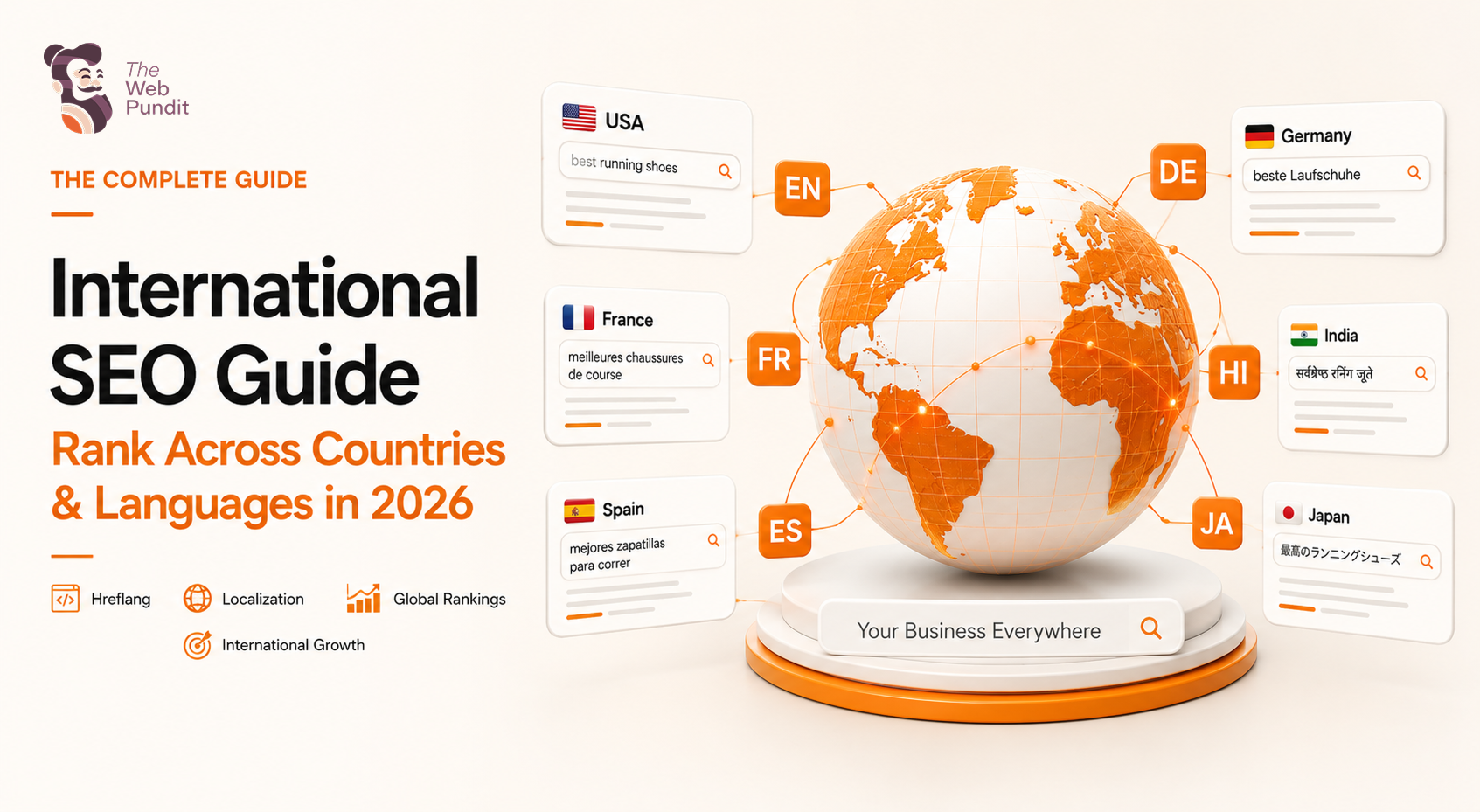
International SEO (If Applicable)
If you target multiple regions:
- Use hreflang tags
- Create localized content
Log File Analysis (Advanced but Powerful)
Shows how search engines actually crawl your site.
Helps identify:
- Crawl waste
- Ignored pages
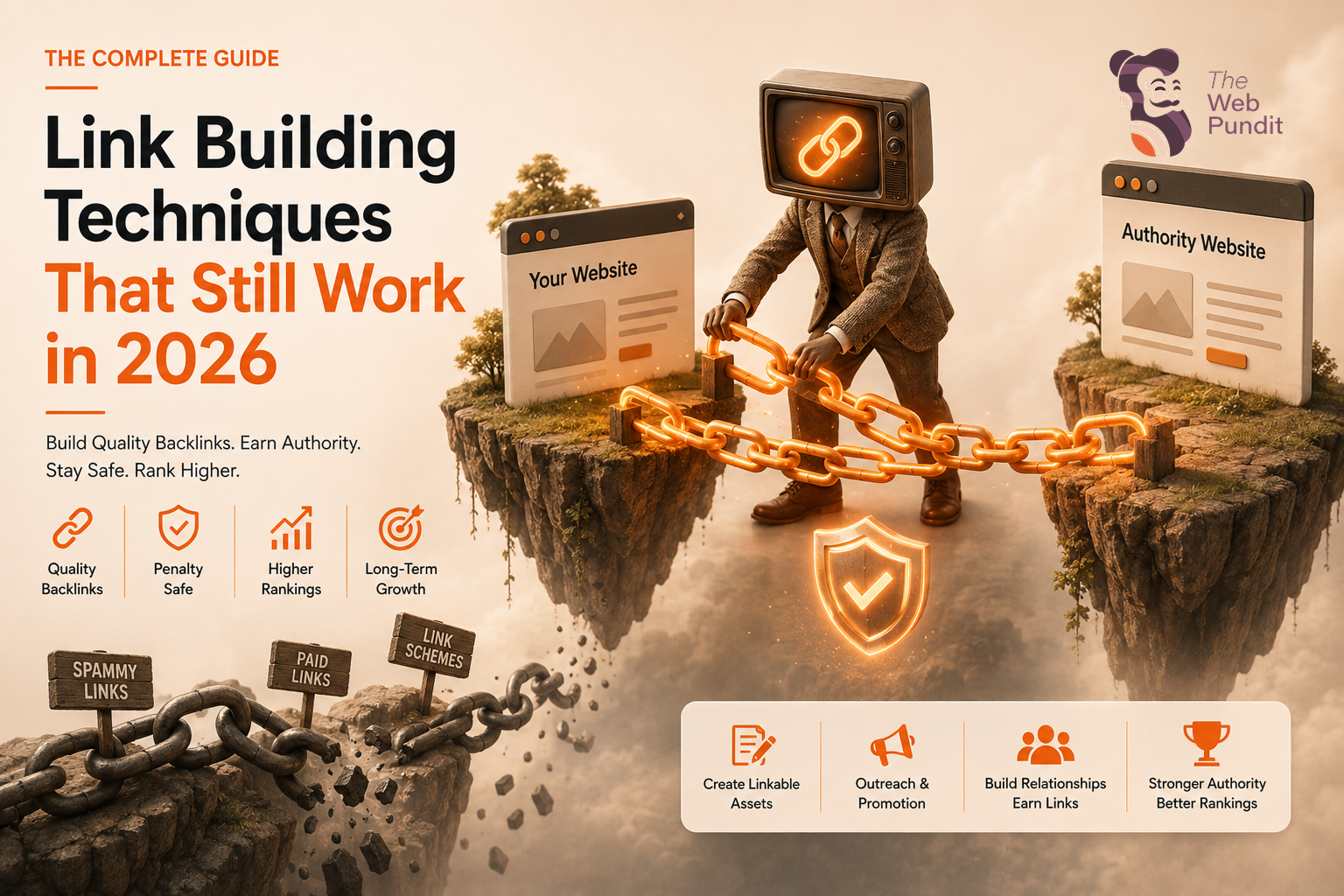
Remove Toxic Backlinks (Technical + Off-Page Overlap)
Bad backlinks can harm SEO.
Use tools to:
- Audit links
- Disavow harmful ones
AI-Friendly SEO (New in 2026)
Search is evolving beyond keywords.
Optimize for:
- Semantic relevance
- Entity-based SEO
- Clear context
Google understands meaning, not just keywords now.
Indexing Control (Important Pages Only)
Not all pages should be indexed.
Use:
- Noindex tags for low-value pages
- Robots directives
Regular Technical SEO Audits
SEO isn’t one-time.
Audit your website:
- Monthly (basic)
- Quarterly (deep)
Common Mistakes Businesses Still Make
Let me be blunt—these kill growth:
- Ignoring technical SEO completely
- Overusing plugins without understanding impact
- Not monitoring Search Console
- Prioritizing design over performance
A “good-looking” website that doesn’t rank is just an expensive brochure.
How Web Pundit Helps Fix This
At Web Pundit, we don’t just build websites—we build search-ready digital assets.
We:
- Audit your technical SEO
- Fix performance issues
- Optimize site architecture
- Improve Core Web Vitals
- Ensure long-term scalability
Because traffic without technical strength doesn’t last.
TL;DR
If your website isn’t ranking in 2026, check this:
- Fix Core Web Vitals
- Optimize mobile experience
- Clean up site structure
- Improve page speed
- Ensure proper indexing
- Use structured data
- Run regular audits
Technical SEO is not optional anymore—it’s the foundation.
Final Thought
You don’t need more content.
You need a stronger website foundation.
Because in 2026:
The best content doesn’t win.
The best optimized content does.
.png)
